


Swordigo
4.715.60K Reviews
App Specs
- Version
- 1.4.12
- Updated On
- License
- Free
- Downloads
- 10,000,000+
- Developer
- Touch Foo
- Categories
- Adventure
- Platform
- Android
Screenshots
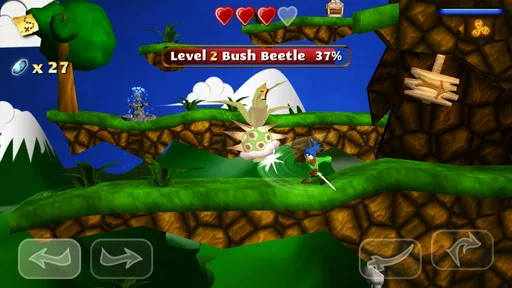
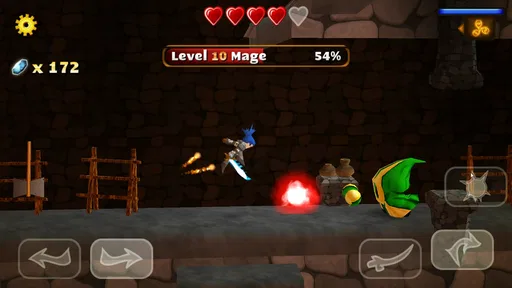
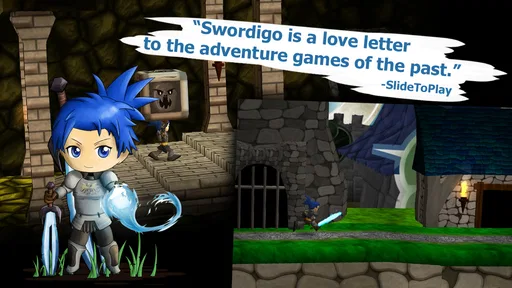
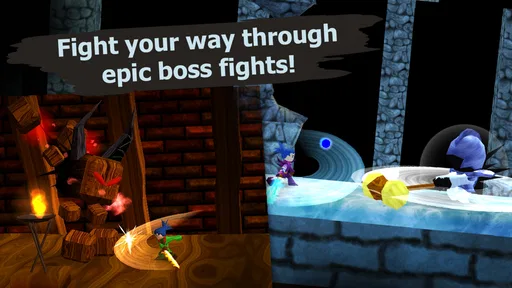
 Analysis by AppCompare
I expected a fairly familiar mobile platformer when I started Swordigo, but its appeal became clearer after a few minutes of play. The first action is simple: move through a side-scrolling world, jump across hazards, and attack enemies with a sword. What keeps me playing is the way those actions quickly become a small conversation with the game. I try a jump, see whether my timing was right, take a hit when it was not, and immediately want another attempt.
That makes this adventure game a good fit for short breaks as well as longer sessions. It does not ask me to learn a complicated control system before the fun begins. At the same time, it gives my decisions enough consequence that I cannot treat every obstacle as decoration. The result is a compact action adventure from Touch Foo that feels more focused than many mobile games built around endless repetition.
How the action turns into a satisfying play loop
I find the play loop satisfying because each attempt gives me something concrete to learn: a safer approach, a better-timed jump, or a more patient opening for a sword strike. In the next section, I’ll look at the practical snags that can interrupt that rhythm and how I work through them without mistaking every setback for a problem with the game.
The first few minutes explain the appeal
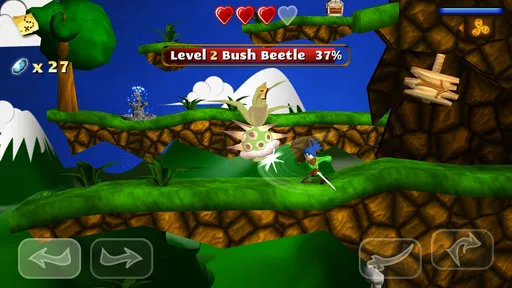
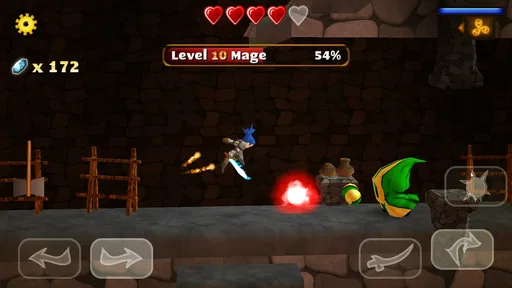
The opening rhythm is easy to understand. I guide the character through platforms, gaps, enemies, and passages that test both movement and combat. Jumping is not just a way to climb upward; it is also how I create space, avoid danger, and prepare for the next attack. Sword strikes are equally direct, but using them carelessly can leave me exposed.
This simplicity is important on a phone. Touch controls can become frustrating when a game demands several precise inputs at once, yet the basic movement in Swordigo feels approachable enough for casual play. I can pick it up without remembering a long list of commands. The challenge comes from reading the situation rather than from wrestling with the interface.
The first useful lesson is to stop treating the sword as the answer to every problem. Some encounters are easier when I move first and attack second. A quick jump can clear an enemy or place me on safer ground, while rushing forward may turn a manageable section into a needless mistake. That small distinction gives the combat more texture than the store summary suggests.
Feedback arrives through movement, damage, and discovery
The game communicates well through immediate consequences. A successful jump carries me forward and confirms that I judged the distance correctly. A missed landing interrupts the route. An enemy hit tells me that my timing, position, or approach needs adjustment. Because the result follows the action so quickly, I rarely feel confused about why a section went wrong.
Worth Reading Before You Choose

EA SPORTS FC Mobile 26 Is a Bigger Football Game, but It Takes Time

Flipboard Shows What News Apps Must Do Beyond the Feed

Switching to Android Auto Means Rethinking Your Driving Routine

Google Calendar Makes a Crowded Week Easier to Manage

Ludo King Makes the Most of the Minutes Between Plans

Baby Panda World Brings Quick Play to Modern Phones, but Its Game Library Feels Busy
I especially like the way exploration and danger overlap. Moving through a new area is not only about reaching the next screen. I am also watching for the safest route, considering whether I should engage an enemy now, and deciding how aggressively to move through unfamiliar terrain. This creates a useful tension: progress feels earned, but the game does not bury every step under lengthy explanation.
That feedback rhythm is also why the game works well for players who enjoy learning through attempts. I do not need to memorize a large rulebook. I can observe what happened, change one part of my approach, and try again. The experience rewards attention more than frantic tapping.
Why another attempt usually feels worthwhile
The reward is not limited to defeating an opponent. Reaching a new section, handling a difficult jump, or finding a better route gives each short sequence a sense of completion. I often begin a session intending to play briefly, then continue because the last mistake feels specific enough to solve.
That is the strongest part of the design for me: failure usually provides information. If I fall, I know I need a different jump angle or better timing. If an enemy overwhelms me, I can slow down and look for a safer opening. The game turns progress into a series of small improvements instead of making success depend entirely on a perfect first attempt.
There is also a pleasant contrast between action and exploration. Fast movement gives the game energy, while the surrounding adventure structure gives that movement a reason. I am not simply clearing an endless stream of identical stages. I am moving through a world, and the next encounter feels connected to that journey.
Resetting after failure keeps the loop moving
A good mobile game needs to make restarting feel less painful than stopping, and Swordigo generally understands that. When a section defeats me, I want to test the correction while the mistake is still fresh. The reset becomes part of the rhythm: act, receive feedback, adjust, and try again.
This matters in everyday use. If I have a few minutes before an appointment, I can play a small portion without needing to commit to a long uninterrupted session. If I have more time at home, the same structure supports a deeper run through exploration and combat. The game can serve both situations because its basic loop is clear even when the larger adventure takes longer.
My practical advice is to avoid replaying a failed section immediately with exactly the same behavior. Change one thing at a time. Try waiting before attacking, approach a jump with a different pace, or use the available space instead of pushing toward the next obstacle. This makes the reset useful rather than repetitive.
Where the game asks for patience
The straightforward controls do not mean every moment is effortless. Platforming requires attention, and enemies can punish rushed decisions. Players who want a completely relaxed experience may find the repeated attempts more demanding than expected. The game is accessible, but it still expects me to participate actively.
Touch input also has the usual limitation of playing on a glass screen. Physical buttons would provide more tactile certainty, especially during tense jumps or close combat. I adapted quickly, but anyone who strongly prefers controller-like precision should keep that preference in mind.
Another trade-off is that the game’s appeal depends on enjoying a traditional adventure structure. If I am looking for a competitive multiplayer match, a social hub, or an endlessly changing challenge, this is not the right choice. Its satisfaction comes from learning a route, overcoming obstacles, and continuing a personal journey, not from comparing scores with other players.
What the progression feels like in practice
The adventure format gives the action a useful sense of direction. I am not only repeating one screen for its own sake; I am moving toward the next part of the world and seeing how the challenges develop. That forward pull is what makes the reward loop stronger than a basic arcade game.
For me, the best way to play is to alternate between caution and momentum. I slow down when entering an unfamiliar area, then move more confidently once I understand the pattern. Charging everywhere creates avoidable damage, while moving too cautiously can make simple sections feel heavier than they are. The game is at its best when I let observation guide the speed of my actions.
This also makes it suitable for different kinds of players. Someone new to mobile adventure games can learn the fundamentals without being overwhelmed by a large interface. A more experienced player can focus on cleaner movement, better timing, and fewer mistakes. It is not a purely passive experience, but it does not require specialist knowledge to become enjoyable.
How it compares with familiar mobile alternatives
Compared with an endless runner, Swordigo gives my actions more context. An endless runner is excellent when I want immediate speed and a score-chasing loop, but its reset usually sends me back to repeat the same basic pattern. Here, jumping and attacking are tied to exploration, so progress feels more like advancing through an adventure than surviving for another few seconds.
It also differs from a traditional role-playing game. I do not approach it expecting a huge menu system, lengthy character management, or a story that asks me to spend most of my time reading. The emphasis stays on movement, combat, and navigating the world. Players who prefer deep customization may want a larger RPG instead, while players who find RPG interfaces tiring may appreciate this leaner focus.
Against other side-scrolling action games, its advantage is the balance between accessibility and consequence. The basic actions are easy to understand, but the game still gives me reasons to improve my timing. It feels more substantial than a disposable tap game without becoming as demanding as a highly technical platformer.
Who should install it, and who should skip it
I would recommend it to anyone who enjoys adventure platformers, especially players who like a clear action loop with exploration around it. It is a strong choice for a commute, a quiet evening, or those moments when I want something more engaging than a passive time-killer but less elaborate than a large console-style game.
It is also a sensible option for families looking for an age-rated game suitable for Everyone. The fantasy action is easy to understand, and the controls do not require a long tutorial before play becomes meaningful. Adults who grew up with side-scrolling adventures may find its structure familiar, while younger players can approach it through the basic language of jumping, moving, and defending themselves.
I would skip it if my priority is online competition, constant novelty, or a completely consequence-free experience. I would also look elsewhere if touch controls regularly bother me in platform games. The game’s strengths depend on accepting its focused format: a personal adventure built from movement, combat, mistakes, and gradual improvement.
Cost, compatibility, and what to expect from the download
The game is free to start, which makes it easy to try without committing money first. Optional in-app purchases range from $1.49 to $1.99 per item. I see that as a reasonable arrangement for a player who wants to sample the adventure and decide later whether the extra purchases fit their preferences, though anyone trying to keep every game completely purchase-free should pay attention to the store prompts.
It is available for Android devices running at least Android 7.0, and the current version is 1.4.12. Those details are worth checking before installing on an older phone or tablet. On a modern compatible device, the game’s focused presentation suits mobile play well, but screen size still affects comfort: a larger display can make platform edges and enemy positions easier to read.
The game has been available since February 27, 2014, yet its central design still works because the action is immediate and understandable. Its audience has grown to over ten million installs, with a 4.8 average from around 840 thousand ratings and roughly 16 thousand written reviews. Those figures suggest broad appeal, but my own reason to recommend it is more specific: the game makes each attempt feel connected to the next.
The small techniques that improve a session
My first tip is to use the environment as part of combat. Instead of meeting every enemy at the same height and distance, I look for platforms and gaps that let me control the encounter. A better position can matter more than attacking quickly.
Second, I treat exploration as preparation rather than a delay. Entering a new section carefully gives me time to understand its layout before I commit to a jump or fight. This is particularly useful after a reset, because I can compare my previous route with a safer alternative instead of simply moving faster.
Third, I separate “progress” from “speed.” Finishing a passage quickly is satisfying, but surviving with a reliable rhythm is usually more valuable. Once I know the route, speed comes naturally. Trying to force it too early is one of the easiest ways to turn a successful run into another restart.
Finally, I play in short goals. Rather than telling myself I must finish a large portion of the adventure, I aim to master the next obstacle or reach the next meaningful point. That approach keeps the game comfortable on a phone and makes the reward after each attempt easier to notice.
My verdict on the complete loop
Swordigo works because its action loop has a clear purpose. I move, jump, and strike; the game answers immediately; I earn progress or learn from a mistake; then I reset and try again with a better idea. The reason to begin another session is not an artificial timer or a confusing collection of systems. It is the simple feeling that I now understand the obstacle well enough to beat it.
Touch Foo has kept the experience focused on the parts that matter most in a mobile adventure platformer. The controls are approachable, the feedback is readable, and the combination of exploration and combat gives short sessions a sense of direction. There are limitations, especially for players who demand physical controls, online play, or very deep customization, but those are boundaries of the format rather than hidden flaws.
After playing it, I would recommend the game to a friend who wants a free, self-contained adventure with enough challenge to make improvement satisfying. I would start with a few minutes, learn how the movement feels on the device, and then decide whether the rhythm suits me. For players who enjoy that cycle of action, feedback, reward, reset, and renewed curiosity, Swordigo remains an easy game to keep coming back to.
Pros
- Smooth platforming controls work well on touchscreen devices.
- Large world offers plenty of areas to explore beyond the main path.
- Equipment upgrades give combat and exploration a satisfying sense of progress.
- Offline play makes it convenient for travel or areas without internet access.
- Distinct environments and enemies keep the adventure from feeling repetitive.
Cons
- Some later battles can feel difficult without careful gear and spell upgrades.
- The story is fairly simple compared with larger action-adventure games.
- Touch controls may feel imprecise during fast jumps or crowded fights.
- Backtracking between locations can become tedious at times.
- The visual style feels dated on newer
- high-resolution phones.
FAQs for Swordigo
What is Swordigo, and what kind of game is it?
Swordigo is a side-scrolling action-adventure platformer for Android and iOS. You explore a colorful fantasy world, fight monsters, discover weapons and spells, solve environmental puzzles, and improve your character over time. Its design combines classic platforming with light role-playing elements, making it suitable for players who enjoy exploration, combat, hidden areas, and a nostalgic console-style adventure rather than a competitive online experience.
Is Swordigo free to download and play?
Swordigo can generally be downloaded and played without paying an upfront purchase price, although availability and monetization details may vary depending on the platform and region. Players should check the current Google Play or App Store listing before installing. The game is primarily designed as a single-player experience, so you do not need a subscription or online matchmaking to progress through its main adventure.
Does Swordigo require an internet connection?
Swordigo is mainly a single-player offline adventure, which means the core gameplay can usually be enjoyed without a constant internet connection. This is convenient for travel or areas with limited connectivity. You may still need internet access to download the game, receive updates, or handle platform-related services such as restoring purchases, depending on your device and operating system.
Is Swordigo suitable for children and casual players?
Swordigo is relatively accessible for casual players because its controls are straightforward and the adventure gradually introduces combat, movement, abilities, and exploration. It contains fantasy violence involving monsters, but its presentation is cartoon-like rather than graphic. Younger players may occasionally need help with difficult platforming sections or boss battles, while fans of challenging retro-style games will likely find the difficulty satisfying.
What devices are compatible with Swordigo?
Swordigo is available for supported Android and iOS devices, but exact compatibility depends on the operating system version, hardware, and the current requirements shown in the official store listing. Before downloading, check the app page for your phone or tablet. Older devices may run the game successfully, although performance, control responsiveness, or loading times can differ from newer hardware.


